

 English
 Español

Small Animal Plush Toys: Design, Materials, and Manufacturing Guide
What Types of Small Animal Plush Toys Are Available?
The range is wide. Some toys copy real animals closely, while others turn them into soft, simplified characters. Which animal you choose, how the body is shaped, what colors go on it and how big it is will set the style.
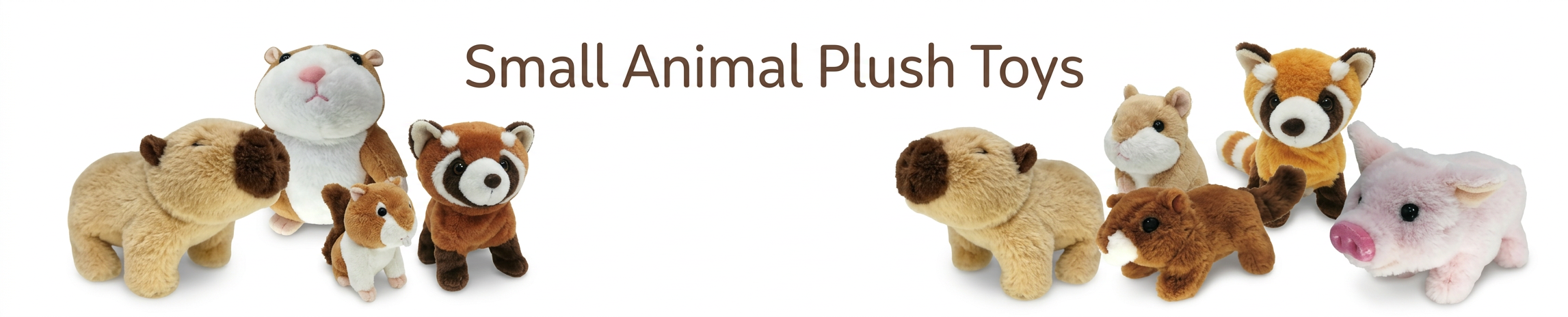
Size shapes the design too. On a small toy there is little room for detail, so clean shapes and strong color contrast work better than fine decoration. A larger toy gives you space for more accurate proportions, accessories and textured fabrics. It's best to settle the intended use and target age group before design starts, not halfway through.
How to Choose Materials and Designs for Small Animal Stuffed Toys
Materials control how a toy feels in the hand, how it looks on the shelf and how well it keeps its shape over time. The right mix depends on the animal, the dimensions, the use and the finishing details you need.
Common Fabric and Filling Options| Material | Main characteristics | Typical use |
|---|---|---|
| Short-pile plush | Smooth, even surface with a short nap | Small animal figures where clean outlines and facial details matter |
| Soft minky fabric | Soft to the touch, with a fine surface texture | Compact plush toys and gentle-looking characters |
| Long-pile plush | Fluffy, with longer fibers | Fox tails, animal ears and textured body areas |
| Polyester fiberfill | Light filling that builds volume | Bodies, heads, arms, legs and tails |
| Felt fabric | Keeps its form and adds contrast | Ears, paws, face details and decorative parts |
Each of these does a different job. Short-pile fabric keeps small features sharp and easy to read, while long-pile fabric gives that fluffy look. Polyester fiberfill gives the toy its body, but the amount has to suit the pattern and size. Too little leaves a toy limp, and too much strains the seams.
Design Details That Affect the Finished Toy- Size and proportions: The ratio of head to body, the length of the limbs and the shape of the tail all change how the character reads. On small plush stuffed animals, a few millimeters can change the whole expression, so patterns need careful testing.
- Facial features: Eyes, noses, mouths and markings can be embroidered, made with fabric appliqué or applied with a suitable printing method. Embroidery gives a soft, built-in finish. Appliqué adds layers of fabric and makes details stand out more.
- Color coordination: Pandas depend on a sharp black-and-white split. Foxes pair warm orange with cream or white. Monkeys often use a different shade on the face, ears, hands and feet to set those parts apart.
- Stitching and filling: Even stitches hold the shape and keep gaps from opening along the seams. Filling should be spread evenly, otherwise you get lumps in one place and flat spots in another. Ears, tails and limbs are small and easy to get wrong, so they need extra care at assembly.
- Cleaning and care: How a toy should be cleaned depends on its fabric and construction. Care labels should match what the toy is actually made of. Not every plush toy can go in a washing machine.
For toys made for children, material choice and construction should also follow the safety rules that apply in the destination market and for the intended age group. Testing may cover mechanical, physical and chemical requirements. Small detachable parts, loose components and any place where the filling could be reached call for particular attention.
